
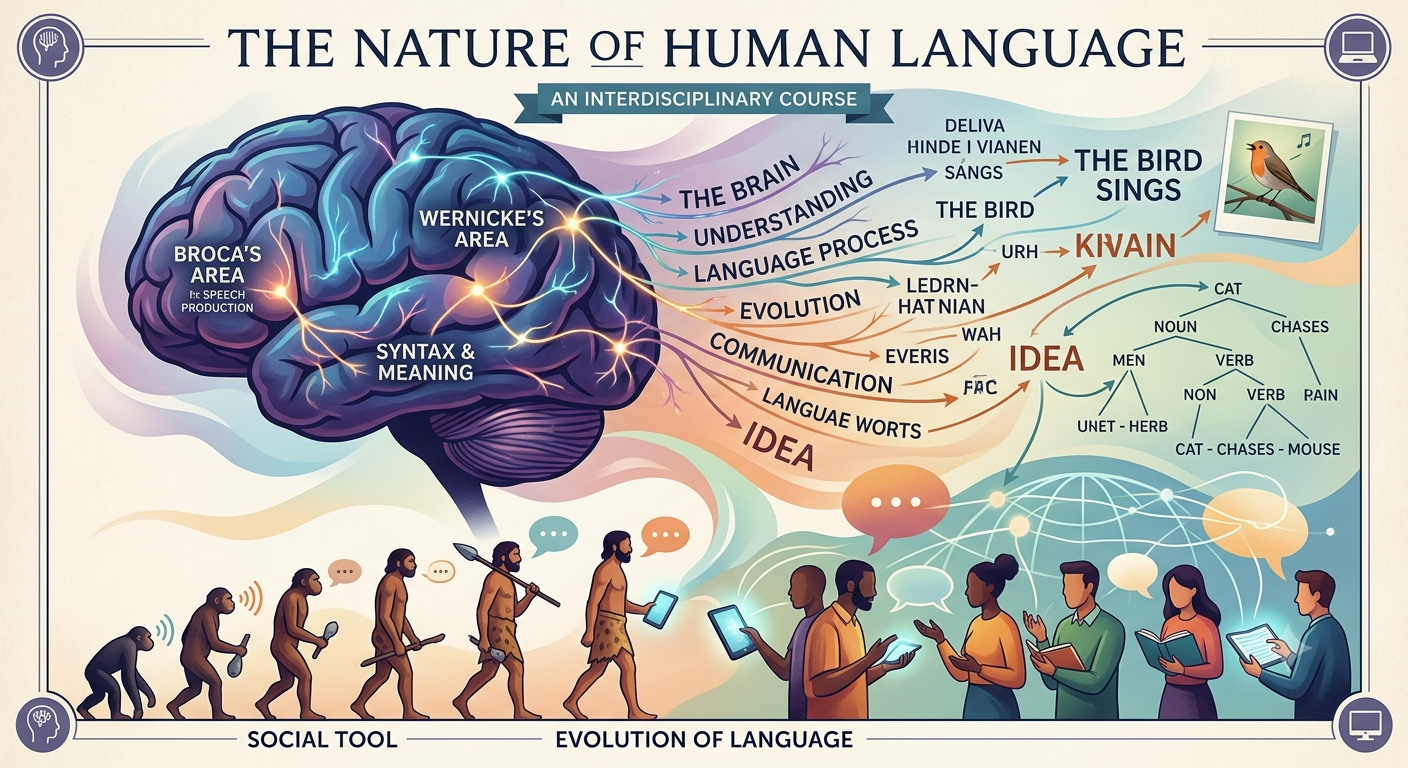
How does human language actually work? This interdisciplinary course explores language as a powerful tool for both the brain and society. Instead of focusing on grammar rules, you will look under the hood at how our neural systems produce speech, process sentence meaning in real time, and shape the way we think. You will also examine how language evolved and discover what makes human communication so unique compared to animal communication. Perfect for anyone looking for a clear, hands-on introduction to cognitive science and linguistics.
- Enseignant: bedda noureddine
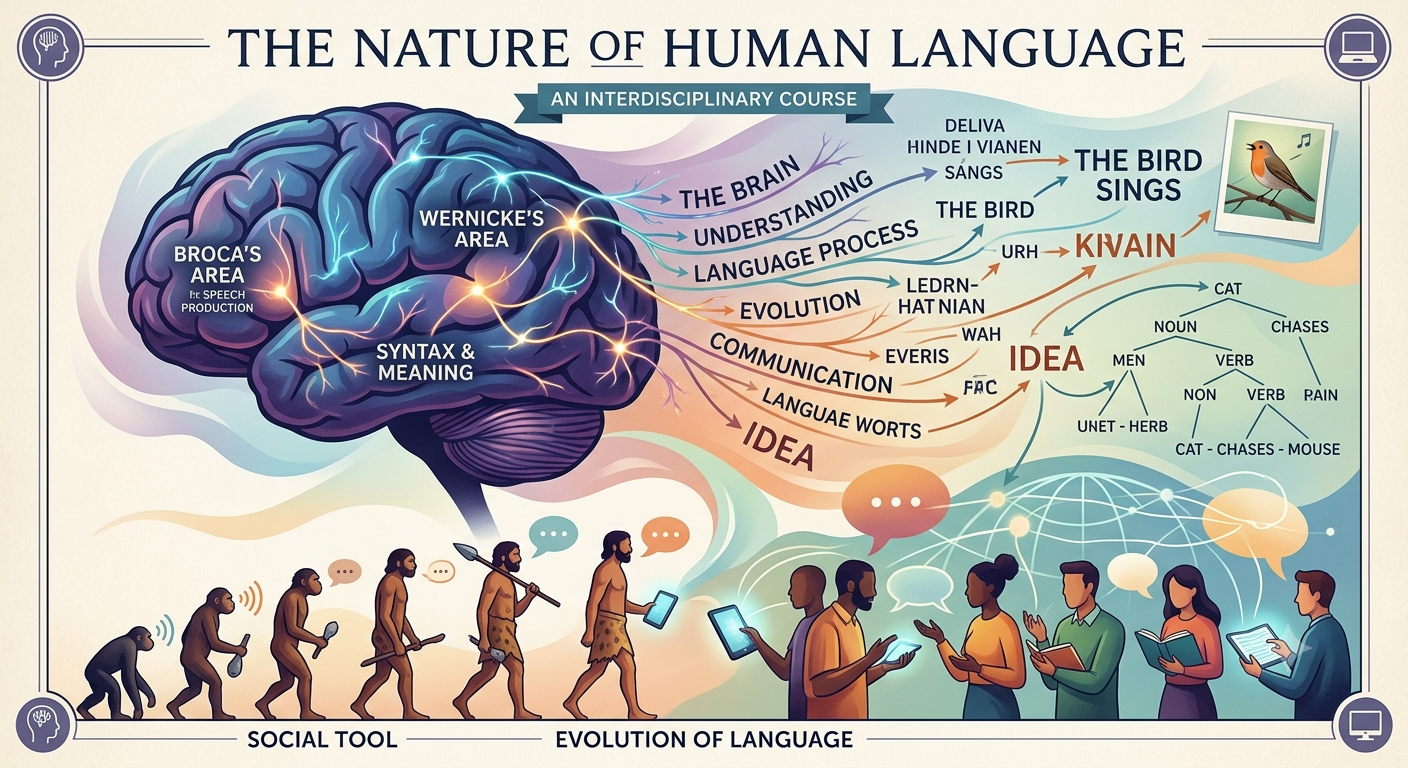
How does human language actually work? This interdisciplinary course explores language as a powerful tool for both the brain and society. Instead of focusing on grammar rules, you will look under the hood at how our neural systems produce speech, process sentence meaning in real time, and shape the way we think. You will also examine how language evolved and discover what makes human communication so unique compared to animal communication. Perfect for anyone looking for a clear, hands-on introduction to cognitive science and linguistics.
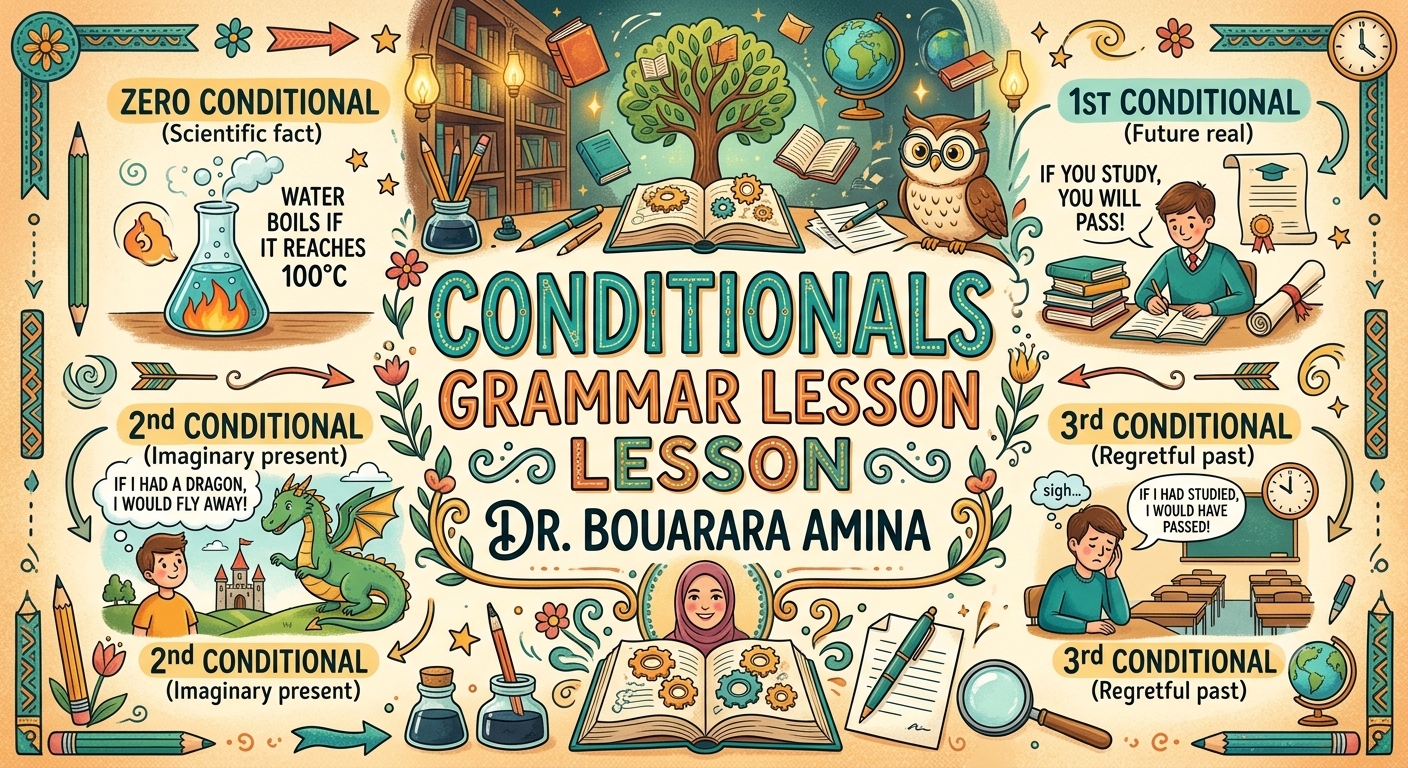
This lesson introduces students to English conditional sentences, enabling them to express facts, possibilities, hypothetical situations, and regrets. It covers the six main types of conditionals (Zero, First, Second, Third, and Mixed Conditionals) and explains their structures, meanings, and communicative functions. The lesson also explores alternative conditional connectors such as unless, provided (that), as long as, even if, in case, and suppose/supposing, helping learners understand how to express conditions in different ways. Through explanations, examples, and practice activities, students develop the ability to recognize, interpret, and accurately use conditional structures in both spoken and written English.